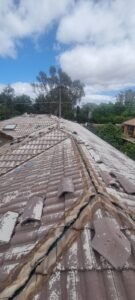
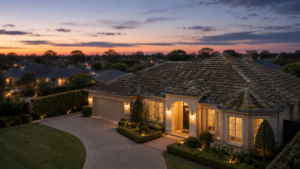
A tired roof drags down the look of an entire house. Faded tiles, crumbling ridge capping and moss creeping across the southern side all read as neglect from the street, even when the house underneath is in good shape.
Roof restoration fixes that, but it is not just a cosmetic exercise. Done properly it repairs what has failed, seals the surface against the weather, and buys you another fifteen to twenty years out of a roof you already own. Here is what the job actually involves, when it is the right call, and when your money is better spent elsewhere.
What a roof restoration actually includes
The word gets used loosely, so it pays to know what you are buying. A genuine restoration on a tiled roof covers five stages:
- High pressure clean. Moss, lichen and the oxidised surface layer come off, back to sound tile.
- Repairs. Cracked and slipped tiles replaced, rusted valley irons renewed, flashings refitted.
- Re-bedding. Old mortar under the ridge caps is removed and every cap is re-bedded on fresh mortar.
- Re-pointing. A flexible pointing compound seals the caps and moves with the roof instead of cracking like rigid mortar does.
- Seal and coat. A primer sealer binds the surface, then two coats of protective membrane in your chosen colour.
If a quote skips the re-bedding and only mentions cleaning and painting, you are being quoted a paint job, not a restoration. That distinction matters, because bedding and pointing are what actually keep water out along the ridge lines.
Signs your roof is ready for restoration
- Tiles have gone chalky and lost their glaze, and mark your hand when touched
- Pointing along the ridges is cracked, crumbling or missing in sections
- Moss and lichen come back faster every year
- You have paid for three or four separate repairs in recent seasons
- Valley irons are showing rust
- Grit from the tiles keeps washing into the gutters
One or two of these on their own usually means a roof repair is the smarter spend. When most of the list applies across the whole roof, restoration is the better value option.
Restoration or replacement?
Restoration works when the tiles themselves are structurally sound and the roof frame is in good order. Tiles are remarkably durable. Concrete and terracotta both last fifty years or more. What fails first is almost always the mortar, the pointing and the surface coating, and all three are renewable.
Replacement becomes the sensible option when a large percentage of tiles are cracked or delaminating, when the battens or rafters have rot or borer damage, or when you want to change material entirely. Bear in mind that changing from tile to metal is a structural change and needs a building permit. We covered that in detail in our guide to building permits for roof repairs in Melbourne.
On cost, a restoration typically lands well under a full replacement. If you are weighing the two, our breakdown of what a new roof costs in Melbourne’s west gives you the comparison figures.
How long it takes
Most restorations run three to five working days, weather permitting. Each stage needs its own window, and the coating in particular needs dry conditions and reasonable temperatures to cure properly.
That is why timing matters in Melbourne. Late spring through to early autumn gives the most reliable run of weather. Winter work is possible but the schedule stretches, because nobody should be spraying membrane onto a damp roof.
What it costs and what drives the price
Every roof is quoted individually, and four things move the number more than anything else:
- Roof size and pitch. Steeper roofs take longer and need more safety setup.
- Access. Double storey homes, narrow side gates and tight blocks all add time.
- Repair volume. A roof needing eighty replacement tiles costs more than one needing a dozen.
- Condition of the bedding. If mortar has failed across every ridge line, that is a substantial part of the labour.
Be wary of anyone quoting a firm price over the phone without looking at the roof. They are either guessing or planning to revise the figure once work starts.
Choosing a roofer
Ask three questions and the field narrows quickly.
Are you licensed and insured? Ask to see it, not just hear it.
What warranty do I get, in writing? There should be two: a workmanship warranty from the roofer and a manufacturer warranty on the coating. A properly coated roof should give you fifteen to twenty years.
Can I see recent local work? Roofs in Werribee, Point Cook and Sunshine face different conditions to those in the eastern suburbs. Local jobs you can actually look at are worth more than a gallery of stock photos.
Looking after it afterwards
A restored roof is not maintenance free. Keep gutters and valleys clear, especially if you have gum trees nearby, and get the roof looked at every few years. Catching a slipped tile early costs almost nothing. Catching it after two winters of water tracking into the ceiling does not.
If the roof is sound but simply looks tired, a high pressure roof clean or a straight roof painting job may be all you need.
Frequently asked questions
Is roof restoration worth it?
If the tiles and frame are sound, yes. You get another fifteen to twenty years from the roof for considerably less than replacement, and the house looks dramatically better from the street.
How often should a roof be restored?
Once every fifteen to twenty years for most tiled roofs in Melbourne, assuming the work was done properly and gutters have been kept clear.
Does roof restoration stop leaks?
It addresses the common causes, being cracked tiles, failed pointing and rusted valleys. If you have an active leak now, get it inspected as a repair first. Coating a roof does not fix a leak underneath it.
What is the best time of year for it?
Late spring to early autumn. The coating needs dry weather and mild temperatures to cure.
Do I need a permit for a roof restoration?
Generally no. Cleaning, repairing, re-bedding, re-pointing and coating leave the structure and material unchanged, so the work falls within the maintenance exemptions.
Get a straight answer on your roof
Silverline Roofing restores tiled roofs across Melbourne’s western suburbs. We will tell you honestly whether your roof needs a full restoration or just a repair, and quote it in writing after we have been up there and looked.
See our roof restoration service or call 0403 131 908 for a free, no obligation quote.