Melbourne storms arrive fast and leave a mess. Wind lifts tiles, branches come down, and water finds every weakness in a roof within minutes. What you do in the first few hours makes a real difference to both the repair bill and the insurance claim.
Here is a practical order of events for homeowners in Melbourne’s western suburbs, from making the house safe through to getting the work done properly.
First, stay off the roof
Wet tiles are slippery, storm damaged tiles are unstable, and a roof with hidden structural damage will not tell you before it gives way. Every year people are seriously injured inspecting their own roof after a storm.
Check what you can from the ground. Binoculars from the backyard will show you missing or slipped tiles, a bent gutter or a branch on the roof. Inside, look at ceilings and cornices for damp patches, and put your head into the roof space with a torch if you can do it safely from the manhole.
If the ceiling is sagging or bulging, stay out of that room. That is water pooling above the plaster, and it can come down all at once.
Make it safe, then stop the water
If water is coming in, contain it. Buckets under the drip, furniture moved, and if the ceiling is holding water, a small hole pierced at the lowest point of the bulge will drain it in a controlled way rather than letting the whole sheet collapse. Turn power off to affected rooms at the switchboard if water is anywhere near light fittings.
Temporary weatherproofing is a job for a roofer, not a homeowner on a ladder in the wind. A proper tarp is fixed down so it does not become a sail overnight. This is exactly what emergency roof repairs exist for.
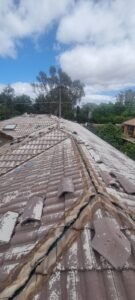
What storm damage looks like on Australian roofs
Most guides online are written for American shingle roofs. Here is what to actually look for on the tiled and Colorbond roofs common across Melbourne.
- Slipped or missing tiles. Wind lifts the leading edge and the tile walks out of position. One gap is enough for water to get in.
- Cracked tiles from impact. Branches and hail leave hairline cracks that are easy to miss from the ground and leak for months.
- Damaged ridge capping. Old mortar lets go under wind load, and the caps shift.
- Lifted metal sheeting. Look for popped fasteners and sheets that have started to peel at the ends.
- Blocked or torn gutters. Debris blocks the flow, water backs up under the tiles and into the eaves.
- Damaged flashings. Around chimneys, skylights and wall junctions, which is where a surprising number of storm leaks originate.
Document everything before repairs start
Insurers assess what you can evidence. Before anyone touches the roof, take photographs.
- Wide shots of the whole roof and the property, plus close ups of each damaged area
- Interior damage, including ceilings, walls, insulation and any ruined contents
- The date, and what the weather did. A screenshot of the Bureau of Meteorology warning for that day is useful supporting evidence
- Receipts for anything you spend on temporary measures, including tarps and emergency call outs
Keep the damaged materials if you can. A cracked tile in the bin is evidence gone.
Making the insurance claim
A few terms worth knowing before you ring your insurer.
Excess is what you pay before cover applies. If the repair is close to your excess, claiming may not be worth the premium impact.
Storm damage versus maintenance is the distinction insurers care about most. Damage caused by a specific weather event is generally covered. Damage caused by a roof that was already failing, with perished pointing and rusted valleys, generally is not. This is why keeping your roof maintained protects your ability to claim, not just your roof.
Make safe works are usually covered separately and do not require approval first. Insurers would rather pay for a tarp today than a ceiling replacement next week.
Lodge the claim promptly and be straight about the roof’s condition. Overstating things is the fastest way to have a claim rejected.
Choosing a roofer after a storm
Storms bring out door knockers. Some are legitimate businesses working a suburb efficiently. Others are not.
Be cautious of anyone who turns up uninvited, pushes for a decision on the spot, asks for a large cash deposit, or offers to cover your excess. That last one is insurance fraud and it puts you in the middle of it.
What to check instead: licensed and insured, a written quote with the scope spelled out, a workmanship warranty in writing, and local jobs you can look at. A roofer who works in your area regularly is easier to get back if something is not right.
Repair or restore?
Storm damage is often the thing that reveals a roof was already near the end. If the storm cracked six tiles but the pointing was crumbling and the valleys were rusting anyway, you may be better off putting the insurance money toward a full roof restoration and topping up the difference.
A good roofer will tell you which situation you are in. Our guide on whether roof restoration is worth it walks through how to judge that.
Reducing the damage next time
- Clear the gutters twice a year. Blocked gutters cause more storm damage than wind does. Book a gutter clean before storm season.
- Trim overhanging branches. Anything above the roofline is a future repair bill.
- Fix small things early. A slipped tile in October is a ten minute job. In February it is a ceiling.
- Get an inspection every couple of years. Perished pointing and rusted valleys are exactly what wind exploits.
Frequently asked questions
Does home insurance cover storm damage to a roof?
Generally yes for damage caused by a specific storm event. Damage from long term wear, rust or failed pointing is usually excluded as maintenance.
How quickly should I get storm damage repaired?
Make safe immediately. Water spreads through ceilings, insulation and wall cavities within days, and mould follows. Permanent repairs can wait a little, but weatherproofing cannot.
Should I get the roof tarped before the insurer inspects?
Yes. You have a duty to prevent further damage. Photograph everything first, keep the receipt, and make safe.
Can I claim if my roof was already old?
You can claim for storm damage, but insurers may reduce or decline if the damage stems from pre existing deterioration rather than the storm itself.
What if I cannot see any damage but the ceiling is wet?
Water travels along battens and rafters before it drops, so the entry point is often metres from the stain. That is a job for someone who knows where to look.
Storm damage? Call us
Silverline Roofing responds to storm damage across Melbourne’s western suburbs. We make the roof safe and watertight first, then carry out a permanent repair and give you the documentation your insurer needs.
See our emergency roof repairs and roof repairs services, or call 0403 131 908.